The 6 States of a Business Transition Process
Successfully managing a business transition process is one of the most difficult challenges a leader can face. It’s a period often marked by uncertainty, resistance, and fear. However, understanding the six distinct stages of this journey is the first step toward leading your team through change, rather than being overwhelmed by it.
Many leaders try to manage transitions reactively, addressing issues only as they arise. A proactive strategy, however, recognizes that employees move through predictable emotional and psychological phases. By anticipating these stages, you can guide your team to a place of commitment and alignment far more effectively.
6 Stages of a Business Transition
A successful transition is key to a long-lasting business. Knowing how to effectively navigate through the stages of transition can make or break your business.
The change curve highlights the common stages that organizations go through while experiencing change. This visual can be highly beneficial, as it can help you identify where you are and some of the problems you may face as you implement change. Being proactive in your transition can help you move swiftly through these six stages, while reactivity will lead to stagnation and business decline.
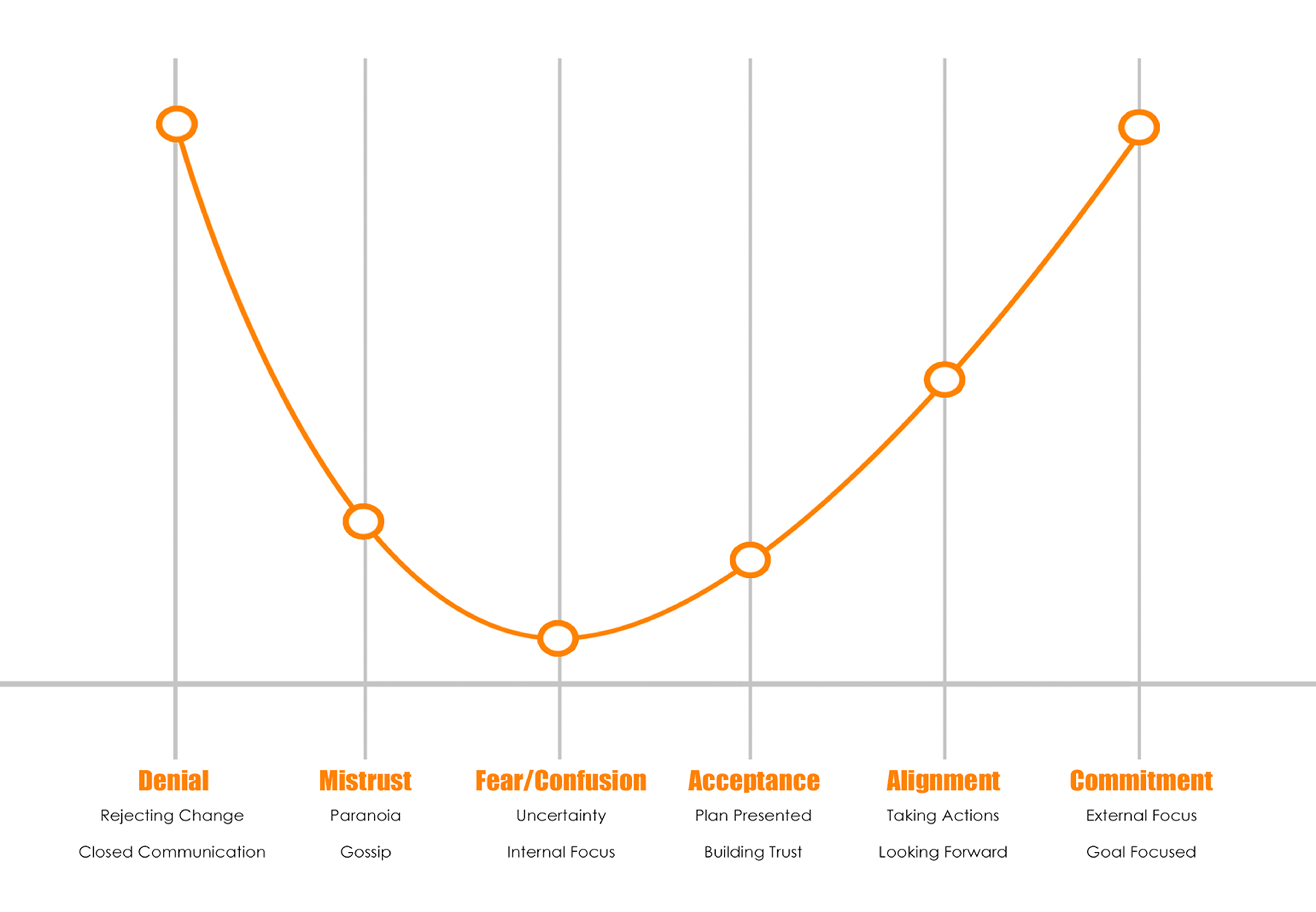
The six stages are as follow:
Stage 1: Denial
The initial reaction to significant change is often denial. Employees may believe the transition isn’t really happening or won’t affect them. You might hear comments like, “This will blow over” or “It’s just another management fad.” Productivity may remain stable, but it’s a fragile peace.
Stage 2: Mistrust
Once the reality of the transition sets in, denial gives way to mistrust and resistance. This is where rumors can spread and negativity can take root. Employees actively resist the change, believing it’s a bad decision or that leadership is not being transparent.
Stage 3: Fear/Confusion
This is the most challenging stage and where many transitions stall. Resistance and mistrust curdle into genuine fear and confusion. Employees worry about their job security, their roles, and their ability to adapt to new systems or processes. Productivity often plummets as uncertainty paralyzes the team.
Stage 4: Acceptance
After moving through the initial shock and resistance, employees begin to accept that the change is permanent. They may not be happy about it, but they are starting to let go of the past and look toward the future. This is a critical turning point where momentum can finally start to build.
Stage 5: Alignment
In this stage, employees start to actively engage with the new reality. They begin to see how they fit into the future of the organization and start testing new behaviors and processes. Teamwork improves, and a sense of shared purpose begins to emerge as people learn and adapt together.
Stage 6: Commitment
The final stage is full commitment. Employees have embraced the transition and are now working to ensure its success. They have integrated the changes into their daily work, feel a renewed sense of ownership, and are often innovating within the new framework. This is the goal of any successful business transition process.
Reactivity vs Proactivity
Being prepared for a business transition can help you overcome many of the obstacles that the six stages present. For example, businesses often get stuck in the Fear/Confusion stage, due to the build up of resistance and feelings of betrayal and mistrust. This results in leaders having to backtrack and identify pain points, strategize how to address these things, develop and implement a plan, evaluate the progress and finally, re-identify and implement any needed changes. On the other hand, organizations who are able to be proactive about their business transition, can reduce the buildup of fear, mistrust and resistance. As a result, when they reach that dip in the change cycle, into Fear/Confusion, it doesn’t take as much effort to push through to Acceptance, Alignment and Commitment.
3 Tips to Create Momentum
If you find yourself stuck while going through these six stages of transition, there are a lot of things you can do. Here are our top three tips:
- Identify the Barriers – Recognize what is stopping you from having those essential conversations. This can be identifying those tasks that keep popping up or any other factors that are preventing you from being proactive about your business transition.
- Communicate – Create more of those open conversations and make it safe for people to come to you with their fears and concerns. Remember, your organization isn’t the only thing that is going to change through your business transition. The lives of every employee will be impacted, so it’s important to give them a voice.
- Ask for Help – Whether you rely on your team or reach out to an outside organization, it’s okay not to know what the next steps are. Managing a business transition is a team effort; you can’t just rely on a single leader.
Overall, taking an active part in your business transition will help increase your chances of success — whether it means allowing yourself time to prepare or seeking solutions to overcome your obstacles.
If you find yourself stuck and unable to build momentum, reach out to our team. Our team of organizational experts at The Utech Group are equipped to break down relational barriers that stand in the way of organization growth. Let us help you succeed.